
Wearable robotics is one of the best ways to teach students how engineering works outside the classroom. An exoskeleton is not only a robot frame worn by a person. It is a system that combines human movement, mechanical design, motor control, sensors, safety, comfort, and real-time response.
At the center of this system is the motor. Without the right motion hardware, a wearable robot cannot provide useful joint assistance. That makes exoskeleton motor design a practical teaching topic for students learning robotics, mechanical engineering, control systems, biomedical engineering, or automation.
By studying how exoskeleton motors work, students can understand how robotic systems move with the human body instead of simply moving on their own.
Why Exoskeleton Motors Are Central to Wearable Robotics Education
Exoskeleton motors are important in education because they help students connect theory with real physical movement. In a classroom, students may learn about torque, speed, feedback, and control systems separately. In wearable robotics, all of these ideas come together in one joint.
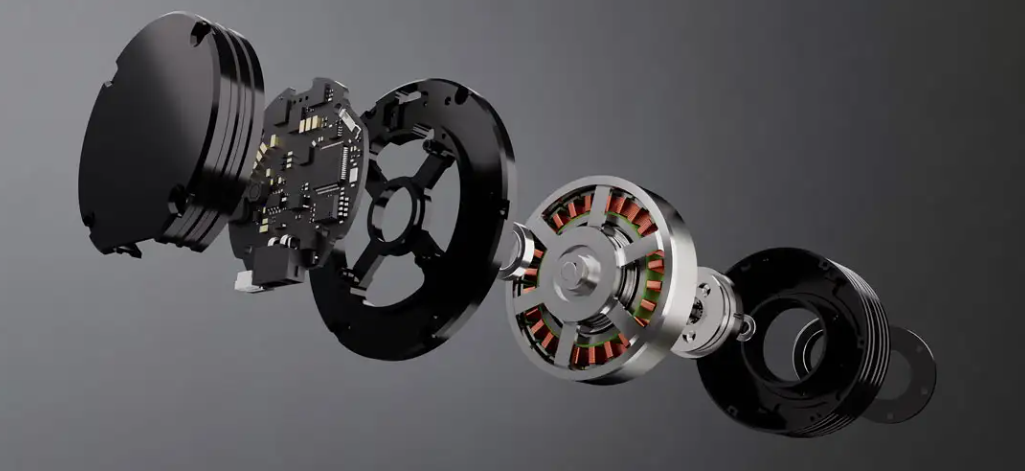
Students studying wearable robotics can better understand real joint assistance by examining how an exoskeleton motor supports torque output, lightweight structure, control response, and safe interaction with the human body.
This is what makes exoskeleton motor design different from many basic robotics lessons. The motor does not move a machine part in isolation. It helps move with a person’s hip, knee, ankle, shoulder, or elbow.
That gives students a clear engineering question:How can a motor provide useful assistance without making the wearable robot heavy, uncomfortable, or difficult to control?
How Motors Connect Human Movement With Robotic Assistance
A wearable robot must follow the user’s natural motion. This means the motor has to support movement at the right joint, at the right time, and with the right amount of force.
For example, a lower-limb exoskeleton may support walking, standing, or rehabilitation training. An upper-limb wearable robot may assist arm lifting, elbow bending, or shoulder movement. In each case, the motor helps convert control signals into joint assistance.
| Human Joint | Wearable Robot Task | Motor Design Focus |
| Hip | Walking and posture support | Torque and smooth response |
| Knee | Standing, walking, and rehabilitation | Stable joint assistance |
| Ankle | Balance and ground adaptation | Fast correction and control |
| Shoulder | Arm lifting and reaching | Lightweight structure |
| Elbow | Bending and extension support | Smooth motion control |
This helps students understand that wearable robot design is not only about building something that moves. It is about designing movement that works with the human body.
What Students Learn About Torque, Weight, and Comfort
Exoskeleton motors are useful teaching examples because they show real engineering trade-offs. A motor must provide enough torque to assist movement, but it also needs to remain compact and lightweight.
If students only study torque on paper, they may think more output is always better. Wearable robotics teaches a more realistic lesson: the motor must match the human joint, the task, and the comfort needs of the user.
Important design questions include:
- How much torque does the joint need?
- How often will the joint move?
- Where will the motor be placed on the body?
- How does motor weight affect user comfort?
- Can the user move naturally while wearing the system?
- Does the actuator support smooth assistance?
This is why exoskeleton motor design is valuable in education. It teaches students to balance power, weight, size, and usability instead of focusing on one specification.
How Motor Control Teaches Safety in Human-Robot Interaction
Wearable robots work directly with people, so safety is a core part of the design. The motor must respond smoothly and predictably. Sudden or poorly timed motion can make the device feel unnatural.
Motor control helps students understand how human-robot interaction works in practice. The system must detect movement, process feedback, and adjust assistance in real time.
Students can learn how control affects:
| Control Factor | Why It Matters in Wearable Robots |
| Position Control | Helps the joint move to the correct angle |
| Torque Control | Supports safe and useful assistance |
| Response Speed | Helps the motor match human motion timing |
| Feedback Accuracy | Improves motion correction and stability |
| Smooth Output | Makes the device feel more natural |
This is especially important in rehabilitation and assistive robotics. The goal is not to overpower the user. The goal is to support movement safely while allowing the user to remain involved and in control.
Why Exoskeleton Motor Design Shows Real Engineering Trade-Offs
One reason exoskeleton motors are powerful teaching tools is that they show students how engineering decisions are connected. Changing one part of the system affects many others.
For example, increasing torque may affect motor size or weight. Reducing weight may affect available output. Making the joint more compact may require better integration. Improving response may require better sensing and control.
This teaches students that wearable robotics is a system-level design challenge.
They must think about:
- Mechanical structure
- Motor performance
- Joint alignment
- Control logic
- Sensor feedback
- User comfort
- Safety requirements
- Long-term wearability
These are the same types of trade-offs students will face in real robotics projects. Exoskeleton motor design helps make those trade-offs visible and easier to understand.
How Wearable Robotics Projects Prepare Students for Future Engineering Work
Wearable robotics projects are valuable because they prepare students for multidisciplinary engineering. A successful wearable robot is not created by mechanical design alone, and it is not created by software alone.
Students need to understand how different fields connect:
| Field | What Students Learn Through Exoskeleton Design |
| Mechanical Engineering | Joint structure, load, weight, and alignment |
| Electrical Engineering | Power, motor drivers, wiring, and signals |
| Control Engineering | Motion response, feedback, and stability |
| Robotics | Actuation, sensing, and system coordination |
| Biomedical Engineering | Human movement and physical assistance |
| Safety Design | Comfort, interaction, and user protection |
This makes exoskeleton projects especially useful in education. They show how classroom concepts become real design choices in human-centered robotics.
Why Exoskeleton Motors Make Robotics Lessons More Practical
Many robotics lessons focus on small mobile robots or simple arms. These are useful, but wearable robots introduce a different challenge: the robot must cooperate with a human body.
That makes exoskeleton motor design more practical and realistic. Students must think about how a motor feels during movement, not only whether it can rotate. They must consider comfort, timing, force, and safety.
This helps students move beyond basic robotics and into real-world design thinking.They learn that a good wearable robot should be:
- Strong enough to assist movement
- Light enough to wear comfortably
- Smooth enough to feel natural
- Responsive enough to follow the user
- Safe enough for human interaction
- Compact enough to fit the body
These lessons are difficult to understand from theory alone. Exoskeleton motors make them easier to study through real design examples.
Final Thoughts
Exoskeleton motors help teach real-world wearable robotics design because they connect engineering theory with human movement. They show students how torque, weight, response, feedback, control, comfort, and safety all work together in one system.
For education, this makes wearable robotics more than an interesting topic. It becomes a practical way to understand human-centered robot design.Students who study exoskeleton motor design learn that successful wearable robots are not only about motion. They are about motion that supports people safely, naturally, and effectively.








Leave a Reply