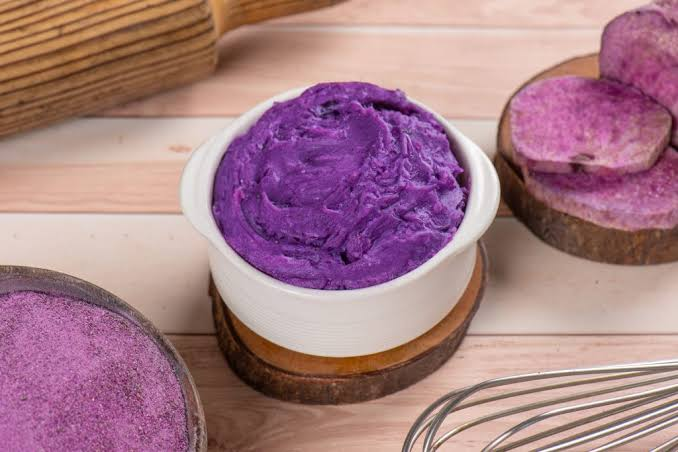

Ube can fit into a sugar-free diet, provided it is prepared without added sugar and eaten in reasonable portions. This naturally purple yam, widely enjoyed in Filipino cuisine, contains starch, fiber, and small amounts of naturally occurring sugars. Its nutritional composition makes it quite different from the sweet, brightly colored desserts commonly associated with its name.
The distinction matters because avoiding added sugar does not necessarily mean eliminating carbohydrates. Fresh ube is a starchy root vegetable, much like sweet potatoes or other yams. It provides energy through carbohydrates, which the body breaks down during digestion. Although ube is naturally low in simple sugars compared with many sweetened foods, it is not carbohydrate-free and can still influence blood glucose levels.
Choosing the right product is equally important. Fresh purple yam, plain frozen ube, and unsweetened organic ube products can provide a useful starting point for recipes without added sugar. However, their nutritional values and ingredient lists deserve attention, particularly when purchasing powders, purees, or commercially prepared mixtures.
Think of ube as a blank canvas. The vegetable itself offers a mildly sweet, earthy flavor, while the ingredients added during preparation determine whether the finished dish suits a low-sugar eating plan. Condensed milk, syrups, and sweetened coconut cream can dramatically change its nutritional profile.
For anyone reducing sugar consumption, managing carbohydrate intake, or exploring healthier alternatives to traditional desserts, understanding how ube affects blood sugar is essential. The variety used, the portion served, and the preparation method all influence how comfortably this purple root can fit into everyday meals.
Is ube naturally free from sugar?
Fresh ube, botanically known as Dioscorea alata, naturally contains carbohydrates, including starch and smaller quantities of simple sugars. It is therefore inaccurate to describe the vegetable as completely sugar-free in the strictest nutritional sense. However, plain ube generally contains relatively little naturally occurring sugar compared with many sweetened foods.
Most of its carbohydrates come from starch, which provides energy during digestion. This explains why boiled ube has a substantial, satisfying texture despite not requiring added sugar. Its natural flavor is mild, slightly nutty, and subtly sweet rather than intensely sugary.
The carbohydrate content of ube varies depending on its variety, growing conditions, maturity, and preparation. Fresh, cooked, and dehydrated forms cannot be compared directly by weight because drying removes much of the water and concentrates the remaining nutrients.
For someone following a diet that excludes added sugars, plain ube can be an appropriate ingredient. Its starch must still be considered when planning meals, especially when daily carbohydrate intake is being monitored.
The difference between natural sugars and added sugars
Natural sugars occur within foods, including fruits, vegetables, and dairy products. Added sugars are incorporated during manufacturing or cooking to increase sweetness. Common examples include table sugar, glucose syrup, honey, and sweetened condensed milk.
Ube provides a good illustration of this distinction. A serving of boiled purple yam contains naturally occurring carbohydrates without requiring additional sweeteners. The same yam transformed into traditional ube halaya may contain substantial amounts of added sugar, depending on the recipe.
The words no added sugar do not mean that a food contains no sugar at all. They indicate that sugar or other qualifying sweetening ingredients have not been added during preparation. Similarly, a food marketed as sugar-free may still contain starch and other carbohydrates.
Those differences become particularly important when reading labels on imported ube products. A purple yam powder may contain only dried yam, while another product with similar packaging may include sugar, flavorings, or sweetened creamer.
When choosing ingredients, examine the full nutritional information rather than relying exclusively on promotional descriptions. Both the total sugars and the total carbohydrate content provide useful information, particularly for people who need to manage blood glucose.
Does the starch in ube affect blood glucose?
Yes. Although starch is not classified as a simple sugar, digestive enzymes break much of it down into glucose. This means that ube can raise blood sugar levels even when prepared without added sugar.
The extent of this response depends on several factors. Portion size matters, but so do cooking methods, the physical structure of the food, and the other ingredients eaten alongside it. A small serving of boiled ube consumed with protein and vegetables may produce a different glucose response from a large serving of finely mashed ube eaten alone.
Ube also contains dietary fiber, which contributes to digestive health and can influence how carbohydrates are absorbed. Nevertheless, its fiber content does not cancel out the effects of starch.
There is limited reliable evidence establishing one universal glycemic index for ube. Values reported for other types of yam or purple sweet potatoes should not automatically be applied to Dioscorea alata, since these plants are not nutritionally identical.
For individuals with diabetes, the most useful approach is to consider the total carbohydrate portion within the overall meal. Personal glucose monitoring, when recommended by a healthcare professional, can help clarify how a particular serving affects blood sugar.
The nutritional benefits of ube in a low-sugar diet
One reason to include purple yam in a balanced diet is that it provides more than starch. Ube contains dietary fiber, potassium, and naturally occurring plant compounds, although the amounts vary between varieties and forms.
Its purple color comes largely from anthocyanins, a family of pigments also found in foods such as blueberries, purple cabbage, and black rice. These compounds have attracted scientific interest because of their antioxidant properties.
Antioxidants in ube may contribute to its nutritional appeal, but laboratory findings should not be interpreted as proof that eating ube prevents disease or directly improves blood sugar control. Research into the specific health effects of purple yam in humans remains limited.
The fiber in minimally processed ube can also support normal digestive function. Unlike sugary desserts made primarily from refined ingredients, a serving of cooked yam retains the structure and nutrients of the original vegetable.
Its naturally pleasant flavor offers another practical advantage. When prepared carefully, ube can be enjoyable without large quantities of sweetener. Cinnamon, vanilla, and unsweetened coconut milk can complement its flavor while keeping added sugar low.
Still, ube is not a substitute for non-starchy vegetables. Someone assembling a balanced plate should treat it as a starchy carbohydrate source, similar to potatoes or rice, rather than assuming its colorful appearance makes it nutritionally equivalent to leafy vegetables.
How can you prepare ube without adding sugar?
Preparing sugar-free ube recipes starts with choosing plain purple yam. Fresh ube should be thoroughly cooked before consumption. Depending on the recipe, it can be boiled, steamed, or baked until tender.
Boiling and steaming are especially convenient because they do not require added sugar or significant amounts of fat. Once cooked, the flesh can be mashed into a smooth puree or cut into pieces for savory dishes.
A simple unsweetened ube puree can be made by blending cooked yam with a little water or unsweetened milk. Vanilla extract, cinnamon, or a small quantity of unsweetened coconut milk can improve its flavor without turning it into a conventional dessert.
Ube also works in savory cooking. Roasted pieces can accompany grilled fish, chicken, tofu, or vegetables. Its earthy flavor pairs particularly well with ginger, garlic, herbs, and coconut-based sauces prepared without added sugar.
For breakfast, a moderate portion of mashed ube can be served with plain Greek yogurt, nuts, or seeds. This combination introduces protein and fat alongside the carbohydrates, creating a more substantial meal than sweetened ube pastries.
When baking, ube powder without added sugar can contribute color and flavor to muffins, pancakes, and homemade snacks. However, replacing sugar does not eliminate carbohydrates from flour, milk, or the ube itself.
Recipes using stevia or monk fruit sweeteners may offer alternatives when sweetness is desired. Their suitability depends on individual preferences, digestive tolerance, and the complete ingredient formulation.
Choosing ube products for a sugar-free eating plan
Not every purple-colored product contains the same ingredients. Commercial ube desserts and beverages frequently include added sugar, sweetened milk, syrups, or flavored powders. Their nutritional composition can differ greatly from plain purple yam.
Traditional ube halaya, for example, is usually prepared with milk, sugar, and fat. It may be delicious, but it should not be confused with unsweetened mashed yam. Similarly, an ube latte from a café can contain sweetened concentrate even when its purple color appears natural.
When shopping, look for products with a short ingredient list. Ideally, an unsweetened powder should contain purple yam as its primary ingredient, without added sugar or sweetened flavoring blends.
Useful distinctions include:
- Plain cooked ube
- Unsweetened ube powder
- Sweetened ube concentrate
- Prepared ube desserts
These products serve different purposes. The first two are generally easier to incorporate into meals without added sugar, provided no sweeteners have been included. The others require closer attention to the label and serving size.
Remember that organic certification does not mean sugar-free. An organic product can contain organic cane sugar, syrups, or other sweetening ingredients. The certification concerns production standards rather than the carbohydrate composition of the finished food.
For packaged foods, inspect the total carbohydrate content per serving, not simply the sugar figure. A product may contain very little sugar but still contribute a considerable amount of starch to the meal.
Can people with diabetes include ube in their diet?
People with diabetes can potentially enjoy ube in controlled portions, although individual carbohydrate needs and responses vary. Diabetes management does not always require eliminating starchy vegetables. The important factors are the quantity consumed, the overall eating pattern, and the person’s treatment plan.
A practical starting point might be a small serving of approximately 75 to 100 grams of cooked ube, with the actual carbohydrate amount checked against reliable nutritional information. This is an example portion, not a universal recommendation.
Pairing ube with protein-rich foods, healthy fats, and non-starchy vegetables can help create a balanced meal. Replacing part of a usual rice or potato portion with ube is generally more sensible than adding a large serving of yam on top of an already carbohydrate-heavy plate.
People using insulin or medications that can cause hypoglycemia should discuss meaningful dietary changes with their diabetes care team. Carbohydrate counting may be particularly important when medication doses are adjusted according to food intake.
There is no convincing clinical evidence that ube itself treats diabetes or reliably lowers glucose levels. Its antioxidant pigments and fiber may be nutritionally interesting, but they do not make it a blood sugar medication.
For someone following a very low-carbohydrate or ketogenic eating plan, ube may be harder to accommodate because of its starch content. A diet that simply avoids added sugars generally allows greater flexibility.
Is ube a better option than traditional sugary desserts?
Plain ube can be a more suitable choice than many traditional desserts when the objective is to reduce added sugar intake. Its natural flavor and creamy texture make it possible to prepare satisfying dishes without relying on refined sugar.
However, the comparison depends entirely on preparation. Boiled purple yam served with cinnamon is nutritionally different from ube ice cream made with sugar and sweetened condensed milk. The presence of a nutritious ingredient does not automatically make an entire dessert healthy.
Homemade recipes allow greater control over portion sizes and ingredients. Using unsweetened milk, plain yogurt, or carefully chosen sweeteners can lower added sugar while preserving the characteristic flavor of purple yam.
Even without added sugar, portion control remains important. Ube contributes calories and carbohydrates, so eating large quantities may not align with every nutritional objective.
It is also worth distinguishing between reducing added sugar for general well-being and managing glucose levels for a medical condition. These goals overlap, but they are not identical. Someone who avoids refined sugar may comfortably include ube, while another person following a strict carbohydrate target may need to limit the same serving.
The most useful principle is simple: choose minimally processed ube, avoid unnecessary sweeteners, and consider the carbohydrate contribution of the complete meal. Its nutritional value comes from the purple yam itself, not from the sugary products frequently made with it.
For everyday eating, cooked ube offers an interesting alternative to other starchy vegetables. It can add variety, natural color, and a distinctive flavor to a balanced diet without requiring added sugar.