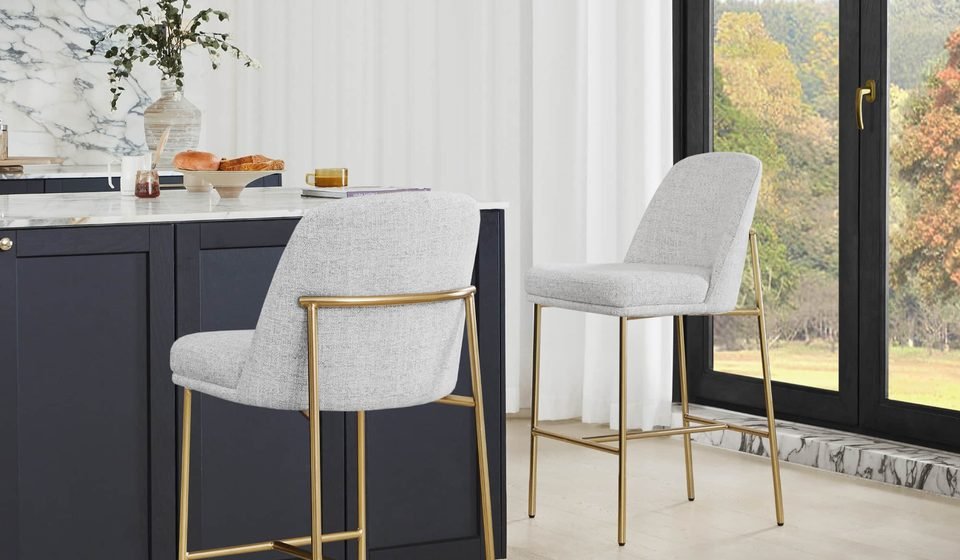

Bar stools are one of the few furniture categories where a wrong purchase becomes obvious within seconds. Too tall and your knees hit the counter; too short and you feel like a child at an adult table; too bulky and every trip through the kitchen turns into a slalom. The seating looks simple, but the math behind it is unforgiving.
This guide focuses on that math and on the daily-use details that separate a stool you enjoy from one that quietly becomes an obstacle. We will cover how to measure counter height correctly, how much seat and footrest matter, what materials survive a busy kitchen, and how to keep a run of stools looking intentional. If you are furnishing an island, a breakfast bar, or a pass-through window, the same principles apply.
Start With Counter Height, Not Style
The single most common mistake is choosing a stool by appearance and then discovering the seat height is wrong. Standard counters fall into two familiar groups, and each calls for a different range of stool heights.
Kitchen counters and standard islands are usually about thirty-six inches high, which suits a bar stool with a seat around twenty-eight to thirty inches. A breakfast bar at roughly forty-two inches needs a taller stool with a seat near thirty to thirty-two inches. Measure the counter surface down to the floor on your own, at several points, because a floor that slopes or a counter that is not level will make a uniform stool height feel uneven. Aim for ten to twelve inches of clearance between the seat and the counter underside; that gap keeps thighs comfortable and lets a stool tuck in.
Once the height is confirmed, the rest of the decision becomes easier. A stool that clears the counter correctly can be almost any style; a stool that does not will be uncomfortable even if every other feature is perfect.
Seat, Footrest, and the Comfort Details
Bar stools are seats without backs most of the time, so the seat surface carries the whole experience. A seat that is too narrow concentrates pressure, and one that is too wide has no support where it counts. A curved or saddle-shaped seat with a slight dip is far more comfortable for longer meals than a flat slab.
Footrests are not optional decoration. A rail at the right height lets you rest your feet, which stabilizes the body and reduces the feeling of perching. If a stool has no footrest, the seat height effectively feels higher and the body tires faster. Check that the rail sits roughly eight to ten inches below the seat for adult use, and that it has enough surface to catch a shoe comfortably.
Backrests are a trade-off worth thinking through. Low backs add support for lingering meals and coffee conversations, while backless bar stools tuck fully under the counter and keep sightlines open. In a narrow kitchen, backless often wins on flow; at an island where people gather, a low back is the more comfortable choice. Consider swivel seats as well, since turning to talk across an island is a common motion and swiveling removes the urge to drag the stool across the floor.
Materials That Survive a Real Kitchen
The kitchen is a working room, and stools take more abuse than most furniture. Spills, splashes, and scooting are routine. Materials should be chosen with that in mind rather than for a photograph.
Metal Frames and Bases
Steel and aluminum bases offer stability and a slim footprint that fits nicely at a narrow island. Powder-coated finishes resist scratching better than bare metal, and a footrest integrated into the metal frame is usually sturdy. Watch for wobble at the joints; a stool that rocks slightly when new will feel worse over time. Adjustable glides on the feet solve minor floor unevenness and protect hard floors.
Upholstery and Seat Surfaces
Fabric seats look warm but demand care in a kitchen. Tight-woven performance fabric or wipeable upholstery is the practical compromise, and removable covers make cleanup much easier. Leather and faux leather wipe clean and age with character, though they can feel hot in humid weather. Wood seats are durable and simple to refinish, and they suit both modern and traditional rooms. Consider a seat that is at least a couple of inches thick for comfort, regardless of the surface material.
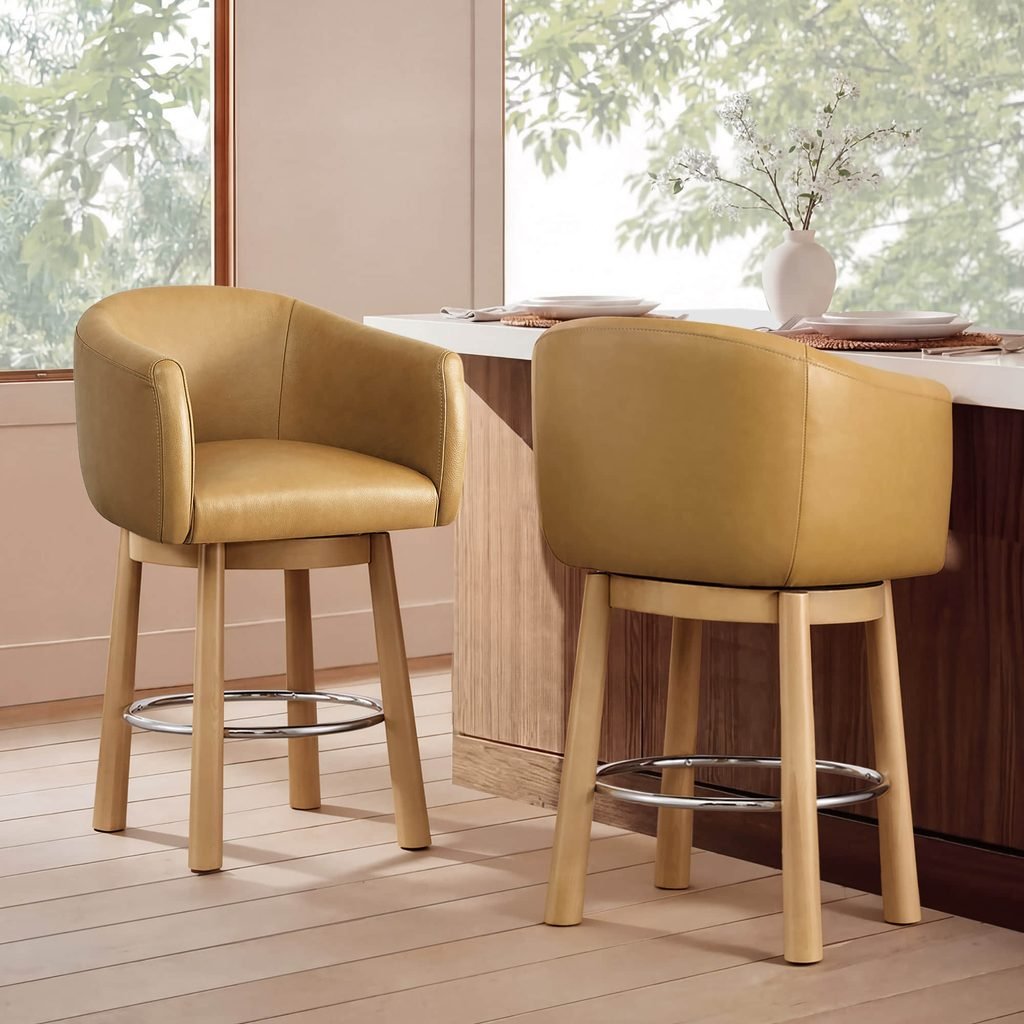
Brands such as CHITA LIVING design stools with a metal or wood base and a shaped seat, which is the combination that tends to work best where function comes first. Look at the base weight, the grip of the feet, and the finish quality on the footrest; those small details reveal how much care went into the piece.
Stability and Safety in a Busy Kitchen
A stool that wobbles is more than an annoyance; it is a hazard in a room full of hot pans and hard floors. Test stability by pushing the stool lightly from the top before you buy, and check that all four feet contact the floor at once. A slightly uneven kitchen floor can be corrected with adjustable glides, but a stool with a twisted base cannot be fixed.
Look at the base spread as well. A wider base is harder to tip, which matters around children who climb and lean. Counter stools with a low center of gravity, whether from a solid metal frame or a weighted wood base, feel secure when someone shifts weight to reach across the island. Avoid stools with narrow, inward-angled legs for households with young kids, since they tip more easily at the edge.
Think about corners too. Rounded seat edges and padded sides reduce bruises in tight kitchens, while a footrest with a flat top is easier to step over than a thin bar. These are small considerations, but the kitchen is where people move quickly and change direction often. The stool that survives daily life is the one that is stable, easy to step off, and wide enough to catch a foot without a stumble.
Working With a Set and the Room Around It
Stools are rarely bought one at a time, so the set has to work as a grouping. Three stools at a standard island is a common arrangement, but spacing matters as much as the count. Allow roughly two feet of seat width per person plus a few inches between stools so elbows and knees have room. A stool that is too wide for the spacing creates constant nudging.
Think about the counter overhang as well. A stool needs enough overhang behind it for knees and shins, usually around twelve inches, or the person sitting will feel pushed away from the counter. If your island has limited overhang, backless stools and a slight tuck-in work better than a set with tall backs.
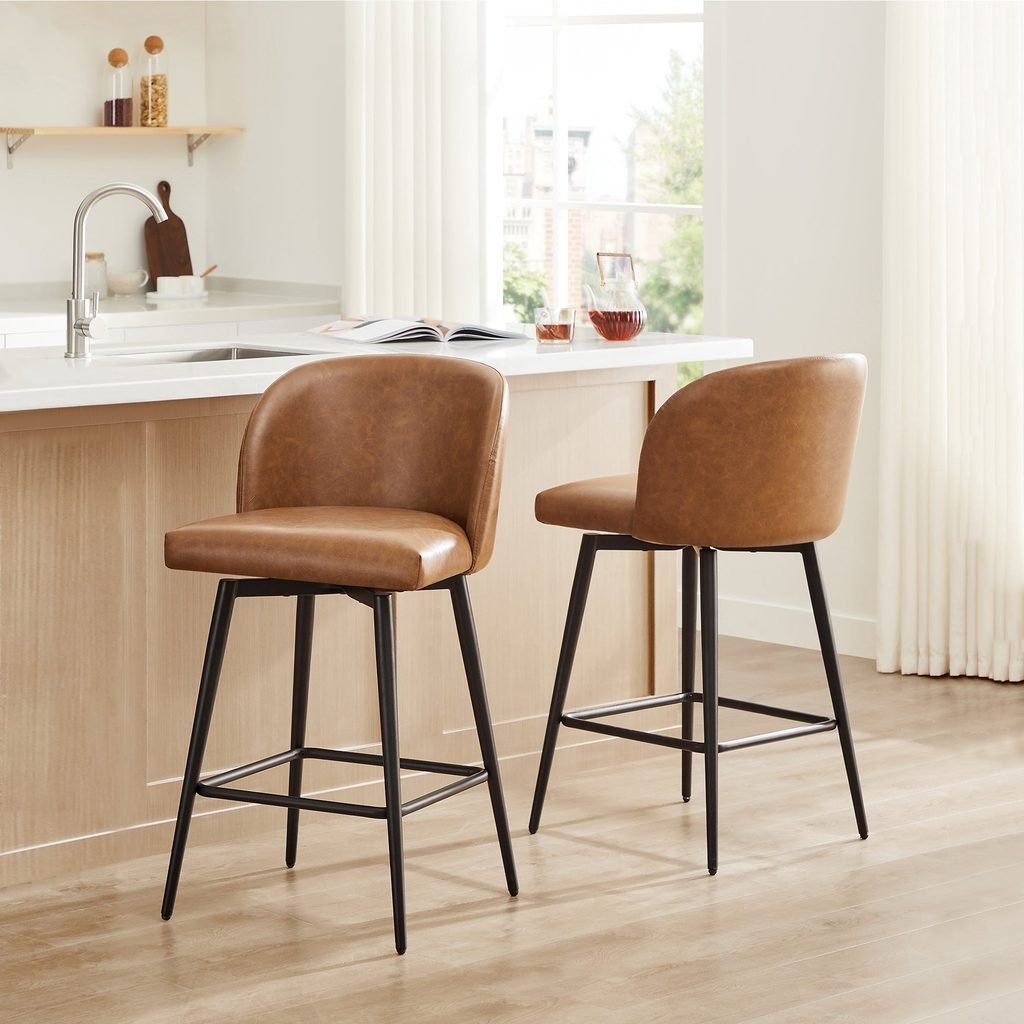
Lighting and color pull the grouping together. If the kitchen is pale and open, a warmer wood or leather stool adds grounding contrast; in a darker kitchen, a pale metal or light upholstered stool keeps the island from reading heavy. A consistent base finish across the set keeps the run of stools from looking mismatched without forcing every piece to be identical.
Mixing Heights and Shapes Without Chaos
Open-plan homes often need stools at more than one surface: a standard island on one side, a raised bar or a counter at the window on the other. Mixing heights is fine as long as the pairing is deliberate. Pick two height groups that match the two counters, and keep the visual language consistent, either by using the same base material or the same seat shape across both groups. A tall stool and a short stool with unrelated designs read as leftovers rather than a set.
Some rooms benefit from a mix of backless and low-back stools at the same counter. Backless stools at the end tuck away when not in use, while a low-back stool in the middle gives the prime seat a little more support. Keep the finishes aligned and the sizes close so the variation feels intentional. If the counter sits against a window, a backless stool preserves the view; if it faces a wall, a low back adds comfort without hiding much.
Finally, plan the long term. A stool set bought to match the current kitchen may need to move when the counters change. Neutral bases and durable seconds, the stools that guests actually sit in, age better than specialty finishes. Choose pieces that are easy to repair, easy to clean, and consistent enough to live through a kitchen refresh without being replaced.
Stools You Stop Thinking About
The right bar stools are the ones you never notice adjusting. Get the counter height right, choose a seat and footrest that support real posture, and pick materials that tolerate a working kitchen. Then let spacing and finish bring the set together.
A stool is small, but it is the furniture most often touched during the day. Treat the choice as an ergonomic decision first and a style decision second, and the kitchen will feel calmer every time someone pulls up a seat.