What a convection fan changes inside a gas range, and what has to happen before one is installed
Thanksgiving is the oven’s hardest day of the year
Canadian Thanksgiving falls on October 12 this year, and for many households it is the one meal where a turkey, several sides and a pie all compete for the same oven. That is when the difference between a basic oven and a gas range with a convection fan becomes obvious, because the fan changes how heat reaches food rather than how much heat there is.
Why does moving air cook faster?
Every piece of food sits inside a thin layer of cooler, still air that clings to its surface. Heat has to cross that layer before it reaches the food, and still air carries heat poorly.
A convection fan keeps sweeping that layer away. The oven temperature stays the same, yet more heat arrives at the surface. So roasts brown sooner and trays on different racks cook more evenly. Many cooks lower the set temperature slightly when using a convection range to avoid overbrowning.
The fan only helps where air can reach. Low-sided pans expose more food to moving air than deep dishes, and space between trays lets the flow reach every rack instead of stalling against a crowded shelf.
What a 36 inch gas range adds beyond power
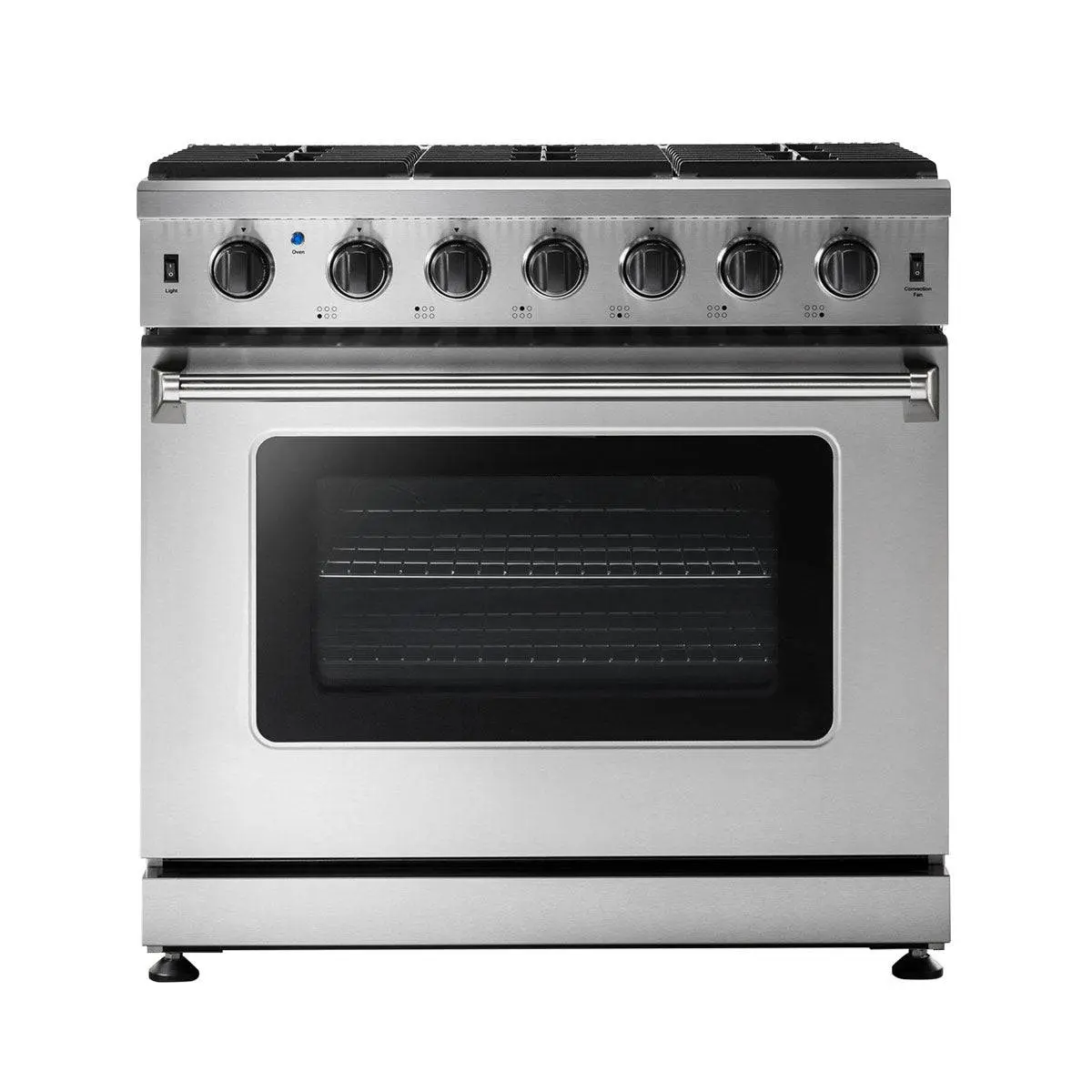
The extra width usually adds burners and room between them, which matters when large pots and a roasting pan share the top. Burners that turn down to a steady low flame are what make sauces and simmering practical beside a high-output burner.
Some buyers weigh a dual fuel range instead, pairing gas burners with an electric oven for dry, steady baking. An all-gas model needs only one fuel supply, and on many ranges the burners can still be lit by match during an outage.
Flame color is the simplest check on any burner. A crisp blue flame means the gas is mixing with enough air to burn cleanly, while a lazy yellow or orange flame points to a clogged port or an air setting that needs adjustment by a technician.
Propane homes need a conversion
Many rural Canadian homes run on propane rather than natural gas. Propane burns at a different pressure and needs different burner orifices. So a gas range set up for natural gas must be converted before use. The rating plate on the appliance states which gas it is currently configured for, and it is worth confirming whether a conversion kit is included.
In most provinces that work, like connecting any gas appliance, belongs to a licensed gas fitter. Appliances sold for installation in Canada should also carry a recognized certification mark, such as CSA, which inspectors and insurers look for.
Installation details that are easy to skip
A freestanding range can tip forward if weight is place on an open oven door. So the anti-tip bracket supply with it should always be fasten to the floor or wall. A high-output professional gas range also produces combustion byproducts, and a range hood vented outdoors keeps indoor air cleaner during long cooking sessions.
Clearances matter too. The installation manual lists minimum distances to cabinets and walls, and a licensed fitter will leak-test the gas connection and confirm that a manual shutoff valve is easy to reach beside the appliance in an emergency.
TMG Industrial fits its 36 inch model with a convection fan and a triple-layer glass oven window, which keeps heat inside the cavity while the door stays cooler to the touch. Seeing a roast through the glass also keeps the door shut, and every opening releases heat the oven must recover.