
Artificial intelligence is changing how manufacturing companies understand challenge records, perceive dangers, and make decisions. However, AI is only as beneficial as the data it gets. Building models with correct, organized, and ordinary data creates a stronger basis for clever assessment and automated workflows.
Modern introduction initiatives generate records from drawings, specifications, surveys, aspect clouds, schedules, price records, and area critiques. Bringing those resources right into an established digital environment permits businesses to research relationships among design factors and manufacturing activities more successfully.
AI-equipped models are consequently becoming a vital part of digital development techniques. They can assist with coordination, quantity takeoffs, layout have a look at, hazard identification, scheduling, procurement planning, and discipline execution, while supporting undertaking stakeholders to work with more reliable data.
Building A Reliable Digital Foundation For AI
An AI-equipped model begins with correct geometry and well-documented project information. BIM Modeling Services can assist in turning layout data into coordinated digital models containing useful architectural, structural, and MEP data
The purpose isn’t always in reality to create a visually amazing three-D model. The model needs to include regular naming, classifications, relationships, dimensions, specs, and unique records that software applications can interpret and view.
A well-organized model can also make collaboration less complex. Architects, engineers, contractors, and proprietors can evaluate the identical virtual surroundings at the same time as figuring out potential conflicts in advance of production beginning.
Important model training practices encompass:
- Use consistent naming and class requirements.
- Maintain accurate geometry and documentation records.
- Remove useless or duplicated data.
- Establish easy version control and revision control.
- Define information requirements before modeling begins.
Connecting Models With Cost And Project Planning
Construction alternatives often depend on accurate facts about quantities, scope, labor, materials, and project conditions. When digital models are nicely primarily based, they will be able to offer valuable facts for early project planning.
A Construction Estimating Company can use coordinated project records to assist quantity assessment, scope evaluation, price-making plans, and layout comparisons. Better version records can reduce the time required to interpret drawings and make it easier to perceive changes that would have an impact on project budgets.
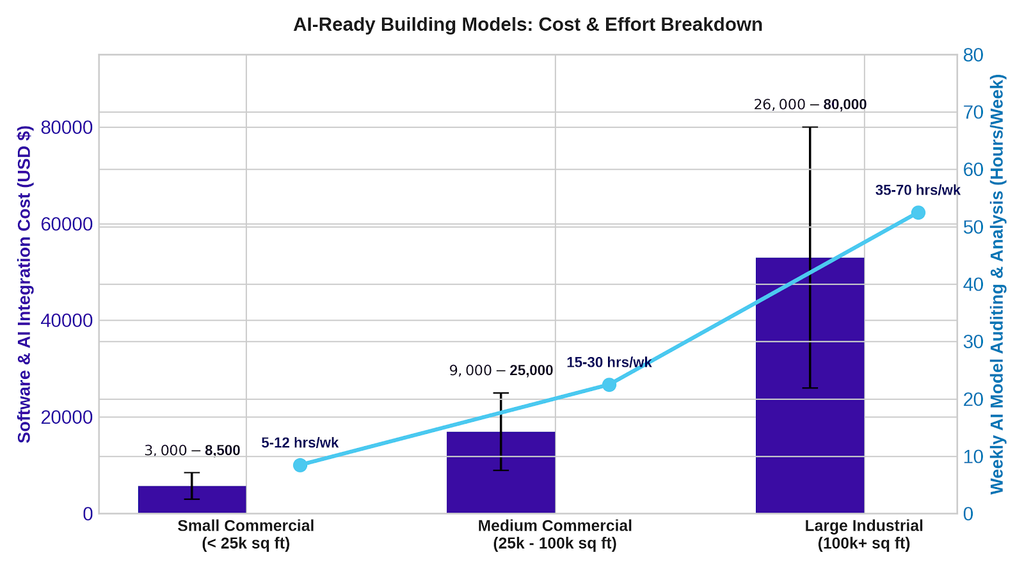
| Project Scope / Stage | Typical Project Size | Data Structuring & AI Setup | Weekly AI Model Auditing & Analysis | Estimated Software & AI Integration Cost (USD) | Primary Deliverables & Workflows |
| Small Commercial / Standard Build | Under 25,000 sq. ft. | 1 – 2 weeks | 5 – 12 hrs/week | $3,000 – $8,500 | Standardized BIM classifications, basic automated clash detection, initial quantity takeoff validation |
| Medium Commercial / Healthcare | 25,000 – 100,000 sq. ft. | 2 – 4 weeks | 15 – 30 hrs/week | $9,000 – $25,000 | AI-assisted multi-trade clash resolution, automated 4D schedule risk flags, integrated 5D cost-estimating sync |
| Large Industrial / High-Rise / Campus | 100,000+ sq. ft. | 4 – 8 weeks | 35 – 70+ hrs/week | $26,000 – $80,000+ | Full predictive VDC management, real-time drone/laser scan vs. BIM variance analysis, automated procurement tracking, digital twin integration |
AI can further enhance this workflow through figuring out styles, evaluating version statistics, flagging unusual quantities, and assisting with repetitive information assessment. Human judgment stays critical, but realistic devices can help agencies process large portions of assignment facts quicker.
Technology can assist industrial organization planning by helping corporations:
- Review portions more efficiently.
- Compare format alternatives.
- Identify potential scope changes.
- Connect version records with estimating structures.
- Improve communication between technical and commercial enterprise groups.
Using AI To Reduce Coordination Problems And Rework
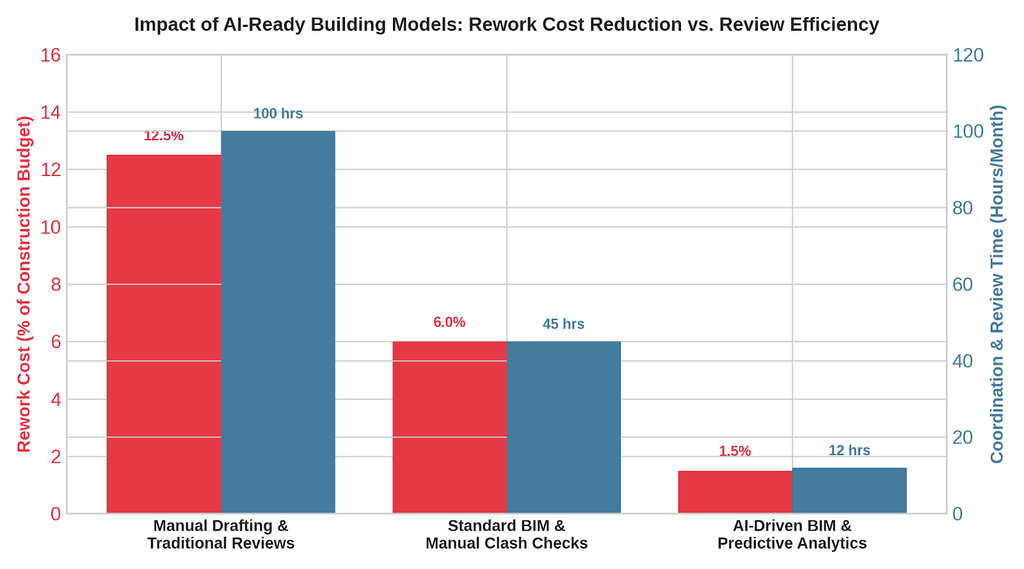
Rework is one of the most costly and stressful situations in construction. Design conflicts, incorrect dimensions, missing records, and coordination mistakes can result in material waste, tough painting delays, timetable disruption, and further expenses.
An AIAI-prepareduilding model provides a stronger environment for identifying issues earlier than they affect the sector. Automated assessment can evaluate relationships amongst building components and assist spotlight functionality conflicts that require human interest.
For instance, a smart workflow can also examine mechanical routes in opposition to structural factors or have a look at planned device places with to be had get proper access to power. When issues are positioned in some unspecified time in the design process, teams have more possibilities to resolve them earlier than set up.
Areas where smart version evaluation can help consist of:
- Clash identification.
- Design consistency tests.
- Model evaluation.
- Space and get proper access to analysis.
- Construction sequencing assessment.
- Change effect assessment.
The result is an extra proactive technique for production planning. Instead of reacting to troubles after setup begins, venture groups can use digital facts to anticipate them earlier.
Turning Building Data Into Better Construction Decisions
AI-prepared models become more valuable when they connect to a specific manufacturing era. Cloud collaboration systems, digital twins, truth seize, task management systems, scheduling packages, and area reporting tools can all make a contribution information to the construction environment.
When current scenario situations may be compared with planned version information, managers have higher visibility into progress. Laser scanning and mobile reality capture can provide updated digital records, while AI-assisted equipment can assist in discovering variations amongst deliberate and actual conditions.
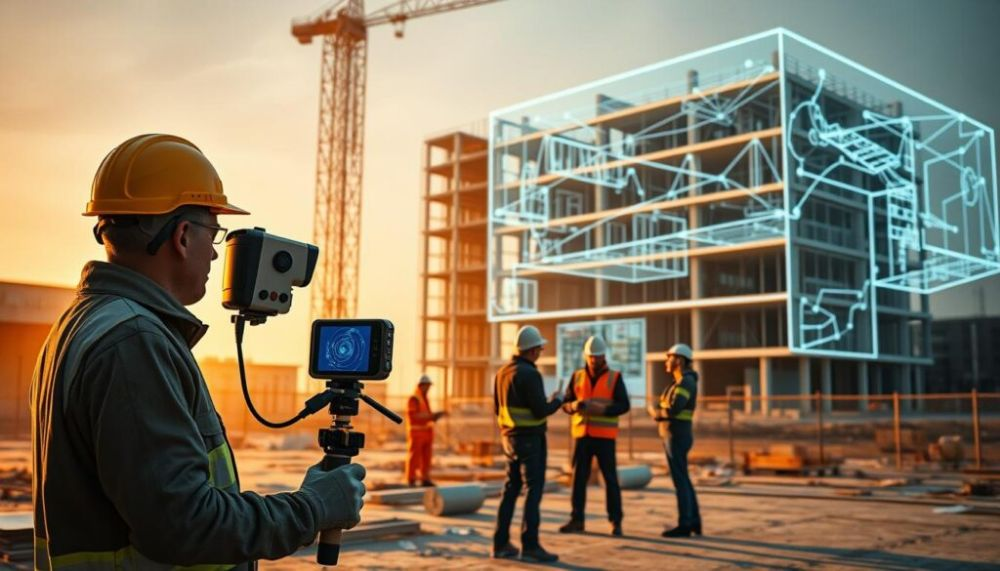
This creates possibilities for predictive decision-making. Project businesses can use historical and contemporary statistics to recognize functionality time table dangers, cost requirements, coordination problems, and productivity issues.
The impact on the business organization may be notable. Earlier visibility offers decision-makers more time to respond, likely reducing delays and wasted spending.
Connecting Intelligent Models With Procurement Strategy
Construction models consist of information that could have an impact on buying alternatives. Product dimensions, specs, portions, locations, and installation requirements can all affect procurement planning.
When model data are well organized, procurement businesses can assess necessities more successfully and coordinate purchasing with manufacturing schedules. This becomes especially useful for business interiors, hospitality obligations, healthcare facilities, retail regions, and massive developments.
Procurement Consulting Services can complement this technology-driven approach with the useful resource of assisting companies to align buying techniques with assignment necessities. Connecting procurement know-how with data-driven information can improve agency coordination, material planning, cost visibility, and decision-making.
Important procurement issues include:
- Verify product records in opposition to modern-day-day layout specifications.
- Coordinatelong-leadd materials with project schedules.
- Track time-honored adjustments and substitutions.
- Maintain clean specs for providers.
- Connect looking for milestones with creation development.
- Review shipping requirements in advance of web page setup.
An associated version can consequently grow to be more than a format document. It can feature an information-resource that facilitates buying and enterprise options at some level within the assignment lifecycle.
Creating A Smarter Construction Workflow
The future of AI-enabled construction is based on connecting accurate data in real time, without a doubt, along with greater software application. An AI device cannot reliably produce beneficial guidelines at the same time because the underlying model consists of inconsistent, incomplete, or outdated records.
Organizations need to focus on data quality, interoperability, smooth processes, and practical workflows. BIM structures, AI structures, cloud collaboration, estimating gear, procurement software, and related technology need to work together instead of operating as separate programs.
Training is also essential. Teams need to understand how data are created, reviewed, kept up to date, and shared. Clear responsibilities help prevent old statistics from entering the decision-making process.
A mature virtual workflow may be part of design development with estimating, coordination, scheduling, procurement, construction, and facility management. This creates a non-preventive flow that allows for quicker options and more potent mission management.
Final Thoughts
AI-prepared building models have emerged as a crucial foundation for cutting-edge manufacturing planning. By combining correct geometry with data-driven insights, organizations can enhance coordination, reduce redesign, reinforce rate visibility, and make better picks throughout the project lifecycle.
The real possibility is not simply the use of AI for automation. It is developing an associated digital environment in which reliable project records can guide people at each stage of construction. As BIM, AI, cloud systems, digital twins, and truth capture become more common, companies that prioritize accurate building data might be better positioned to supply efficient, predictable, and commercially successful outcomes.
FAQs
1. What makes a construction model AI-ready?
An AI-ready model incorporates accurate geometry, facts, consistent classifications, and dependable relationships among construction elements.
2. Can AI assist in reducing design rework?
Yes. AI-assisted assessment can help discover clashes, inconsistencies, design adjustments, and functionality issues earlier than they become problems.
3. How can BIM support manual price planning?
Structured BIM data can assist organizations in assessing portions, understanding project scope, examining alternatives, and offering more data for price-making plans.
4. What era artwork with AI-ready models?
BIM systems, cloud collaboration platforms, digital twins, truth seize, estimating software, scheduling tools, and project packages can all make a contribution to a related workflow.
5. Why is data tremendously critical for manufacturing AI?
AI is based on the data it receives. Incomplete, inconsistent, or previous model data can reduce the reliability of automatic evaluation and guidelines.
The Business Value of Accurate Estimates in Today’s Competitive Construction Market