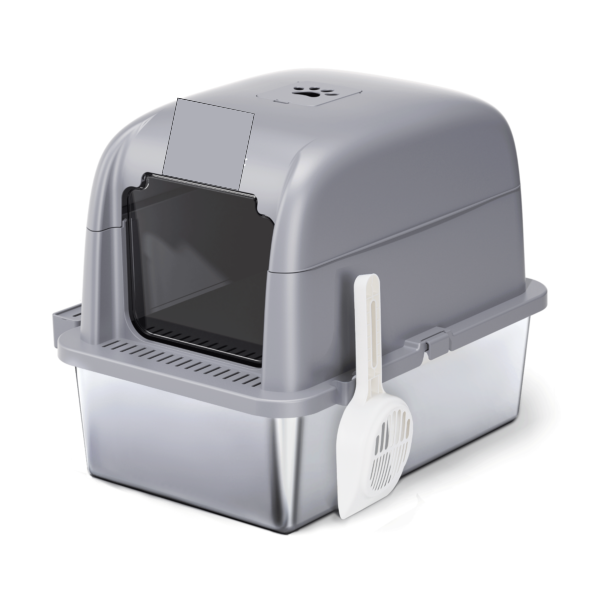

If you share your home with a Maine Coon, Ragdoll, or any large-breed cat, you already know the struggle. Litter scattered across the bathroom floor, urine overshooting low walls, and a box that somehow always smells despite daily scooping — these aren’t minor inconveniences, they’re daily battles. At the heart of solving these problems lies a fundamental choice: should you stick with the familiar plastic litter box, or upgrade to a stainless steel alternative that promises to eliminate many of these headaches?
This decision matters more than most pet owners realize. The material and design of your cat’s litter box directly affect household hygiene, how often you need to replace the box, and whether your cat actually feels comfortable using it. A dissatisfied large cat won’t hesitate to find alternative spots around your home. This guide breaks down the stainless steel versus plastic debate with your big cat’s specific needs in mind, giving you the clarity to invest wisely and keep both your home and your feline companion happy.
Why Large Cats Need a Specialized Litter Box Solution
A fifteen-pound Maine Coon doesn’t use a litter box the same way an eight-pound domestic shorthair does. Large cats need room to turn around, dig comfortably, and posture naturally without their bodies pressing against walls or hanging over edges. When forced into a standard-sized box, many big cats adopt awkward crouching positions that can actually discourage regular use — and a cat that avoids its box becomes every owner’s worst nightmare.
The physics of a large cat in motion compound the problem. Powerful hind legs send litter flying with every dig, and standard walls measuring five or six inches simply can’t contain the spray. Male cats in particular may direct urine streams above the rim entirely, leaving owners to discover puddles behind the box hours later. Then there’s structural integrity to consider. A twenty-pound Ragdoll stepping onto the rim of a lightweight box can crack edges, warp sides, or send the entire unit sliding across tile floors. These aren’t design flaws in the cat — they’re design flaws in the box. Understanding that large breeds demand more space, taller containment walls, and sturdier construction is the first step toward eliminating daily litter box frustrations. The material you choose determines whether those solutions last months or years.
The Material Showdown: Stainless Steel vs. Plastic
When you strip away brand names and marketing claims, the litter box decision for large cat owners ultimately comes down to what the box is made of. Material determines how the box performs under daily stress, how it smells after six months of use, and whether it can withstand the demands of a powerful feline. Let’s examine both options honestly.
The Case for Stainless Steel Cat Litter Boxes
Stainless steel brings industrial-grade durability into your home. The surface is completely non-porous, meaning urine, moisture, and bacteria have nowhere to hide — a quick wipe or rinse returns it to a genuinely clean state, not just a visually clean one. Your large cat’s claws won’t leave scratches that trap odor-causing residue, no matter how aggressively they dig. The weight of stainless steel works as a feature rather than a drawback; a heavy box stays planted when a fifteen-pound cat leaps in or pushes against the sides. Aesthetically, these boxes look clean and modern rather than utilitarian. Some owners worry about the metal feeling cold or the higher upfront investment, but most find the surface reaches room temperature quickly and the purchase pays for itself when you’re not replacing boxes every year.
The Reality of Plastic Litter Boxes
Plastic boxes dominate store shelves for good reason — they’re affordable, lightweight, and available in every configuration imaginable, from basic open trays to elaborate enclosed designs with carbon filters. However, the material itself works against long-term satisfaction. Plastic is inherently porous at a microscopic level, and once your cat’s claws create visible scratches, those grooves become permanent reservoirs for bacteria and ammonia. No amount of scrubbing fully eliminates the smell that develops after several months of use, which is why veterinarians recommend replacing plastic boxes entirely at least once a year. For large cats specifically, thinner plastic walls can bow outward under pressure, crack at stress points near the entry, or slide across smooth floors when a heavy cat shifts its weight inside.
Essential Features for a Mess-Free Experience
Choosing the right material is only half the equation. The design features built into your cat’s litter box determine whether you’re still wiping up scattered litter and scrubbing surrounding floors every morning. For large cats, certain structural elements transform a basic box into a genuinely mess-free system — and understanding these features helps you evaluate any option, whether stainless steel or plastic.
High-Sided Cat Litter Box Designs
Walls measuring eight inches or higher dramatically reduce the litter spray that large cats generate during vigorous digging. High sides also contain urine from cats that posture upright rather than squatting low, a common behavior in bigger males. However, tall walls on all four sides can create accessibility problems for senior cats or those with joint issues. The most practical high-sided cat litter box designs incorporate a lower entry point on one wall — typically around five to six inches — while keeping the remaining three sides at full height. This combination gives your cat easy entry and exit while containing the mess where it actually occurs: behind and beside the cat during use.
Considering an Enclosed Cat Litter Box
An enclosed cat litter box appeals to owners who want maximum containment and appreciate giving their cat privacy. These hooded designs trap scattered litter inside and can reduce odor spread into the room. The tradeoff for large cats is significant, though. Many enclosed boxes feel claustrophobic for a seventeen-inch-long cat that needs room to turn and reposition. Trapped ammonia fumes inside the enclosure can also discourage a cat from entering altogether. If you prefer an enclosed design for your large breed, prioritize models with generous interior dimensions, removable tops for thorough cleaning access, and adequate ventilation openings that prevent stale air buildup inside the box.
Your Guide to Choosing the Best Cat Litter Box
Knowing the differences between materials and features is valuable, but translating that knowledge into the right purchase requires a systematic approach. The best cat litter box for your large breed isn’t necessarily the most expensive or the most reviewed — it’s the one that matches your specific cat’s habits, your cleaning preferences, and your household setup. Here’s how to move from research to confident decision-making.
Step-by-Step Evaluation for Your Cat
Start by measuring your cat from nose to tail base, then add at least six inches to determine the minimum interior length your box needs. Spend a few days observing how your cat behaves during use — does it stand tall while urinating, dig aggressively toward the back, or prefer to face one direction? These habits dictate whether you need extra-high rear walls, a low-entry front, or additional floor space for turning.
Next, rank your priorities honestly. If persistent odor drives you crazy despite daily cleaning, a non-porous stainless steel surface will serve you better than any plastic alternative regardless of design. If budget constraints are real, a high-quality thick-walled plastic box with tall sides can still perform adequately for a year before needing replacement. Compare specific models by checking interior dimensions rather than exterior measurements, since thick walls and enclosed hoods reduce usable space. Finally, seek out reviews specifically from owners of large breeds — their experiences reveal whether a box that looks spacious in photos actually accommodates a twelve-pound-plus cat comfortably.
Finding Risk-Free Trial Options
Your cat’s acceptance matters more than any specification sheet, so minimize your financial risk when trying something new. Look for retailers offering thirty-day return windows that allow lightly used products back, since many online pet suppliers now accommodate this. Check whether manufacturers stand behind their products with satisfaction guarantees — reputable brands like Meowant often do, given their confidence in the material’s performance. Some modular litter box systems let you purchase a base unit first and add extensions or covers later, spreading cost while testing whether your cat approves of the fundamentals. Subscription-based pet supply services occasionally offer introductory trial pricing that makes testing a premium option less daunting.
Long-Term Value and Hygiene: The Final Verdict
When you calculate the true cost of a litter box, the sticker price tells only a fraction of the story. A plastic box purchased today will likely need replacing within twelve to eighteen months as scratches accumulate and odors become permanently embedded in the material. Factor in the enzymatic cleaners, baking soda additives, and deodorizing sprays many owners buy to combat that stubborn plastic smell, and the annual cost climbs well beyond the initial purchase. Multiply that cycle over your cat’s lifetime — potentially fifteen to twenty years for many large breeds — and the numbers become difficult to ignore.
A stainless steel litter box represents a one-time investment that eliminates this replacement cycle entirely. The non-porous surface never degrades, never absorbs odor, and never develops the bacterial colonies that make plastic boxes progressively harder to maintain. For large cats that exert significant force during use, the structural integrity of steel means no cracking, no warping, and no gradual deterioration of walls that eventually compromise containment. Daily cleaning becomes genuinely effective rather than cosmetic — warm water and mild soap restore the surface completely, without lingering ammonia notes that signal bacterial buildup beneath the surface layer. The best cat litter box isn’t the one that works adequately for a few months; it’s the one that performs identically on day one and day one thousand, solving your large cat’s litter challenges permanently rather than temporarily.
Making the Right Litter Box Investment for Your Large Cat
Large cats deserve a litter box that respects their size, strength, and natural behaviors — and you deserve a solution that doesn’t require constant damage control. The standard plastic box that works fine for smaller breeds simply wasn’t engineered for the demands of a fifteen-to-twenty-pound cat with powerful digging instincts and a body that needs room to move comfortably.
While plastic litter boxes remain a viable short-term option when budget is the primary concern — particularly thick-walled, high-sided models designed for larger breeds — stainless steel cat litter boxes deliver where it counts most over time. Their non-porous surfaces eliminate the odor absorption cycle that plagues plastic, their structural integrity withstands years of heavy use without degradation, and their cleaning simplicity means daily maintenance actually works rather than merely masking deeper hygiene issues. For owners who’ve grown tired of replacing boxes annually and battling embedded smells, the switch represents a permanent fix rather than another temporary measure.
Use the evaluation steps outlined above to match your specific cat’s dimensions and habits with the right design features. Observe, measure, and take advantage of trial-friendly purchasing options to ensure your cat accepts the new setup. Whether you ultimately choose a premium stainless steel model or a well-constructed high-sided plastic alternative, making an informed decision based on your large cat’s actual needs — rather than defaulting to whatever’s cheapest on the shelf — will save you frustration, money, and cleanup time for years to come.