Natural ube powder: criteria for choosing a quality product
Ube powder can look deceptively simple: a bright purple powder packed into a pouch or jar. Yet two products with similar packaging may differ considerably in purity, flavour, nutritional value and usefulness in recipes. Genuine ube comes from Dioscorea alata, a purple yam traditionally used in Filipino cuisine, where its naturally sweet, earthy and slightly nutty character makes it popular in desserts and drinks.
Quality matters because not every purple powder sold for baking is the same thing. Some products are made from pure dehydrated ube, while others contain sugar, flavourings, colouring agents, starches or even different purple tubers. A striking violet colour is therefore not enough to prove authenticity. Think of colour as the cover of a book: attractive, but it tells you very little about what is actually inside.
Understanding the raw ingredient is the best starting point. Authentic ube yam belongs to the yam family and should not be confused with purple sweet potato or taro. Although these foods can appear similar once powdered, they differ in flavour, texture and botanical origin. Looking at the ingredient list, processing method and sensory characteristics makes it much easier to identify a natural ube powder worth using regularly.
What should natural ube powder actually contain?
A high-quality product should have a remarkably short ingredient list. Ideally, the label should state 100% ube, purple yam or Dioscorea alata, without unnecessary additions. A single-ingredient powder gives you greater control over sweetness, colour and flavour when preparing cakes, breads, smoothies or hot drinks.
Added sugar is common in products designed as instant drink mixes or dessert preparations. These can still be useful, but they should not be confused with pure ube powder. Maltodextrin, artificial flavours, synthetic colouring and anti-caking ingredients may also appear in heavily processed versions. Their presence does not automatically make a product unsuitable, but it changes what you are buying.
When comparing options, a dedicated ube powder made primarily from dehydrated purple yam is generally more versatile than a premixed preparation. It allows you to adjust recipes according to your own needs rather than working around added sweeteners or flavourings. For nutrition-conscious buyers, this distinction is particularly useful because the ingredient list remains easier to interpret.
Pure powder versus flavoured mixes
Pure ube powder is normally made by cooking or preparing the tuber, removing moisture and grinding the dried material into powder. The result is concentrated and relatively neutral in sweetness. Its flavour becomes more pronounced when the powder is rehydrated or combined with ingredients such as milk, coconut milk or butter.
A flavoured ube mix is designed for convenience. It may contain sugar, dairy powder, colouring or aromas that produce an immediately intense taste. This can work well for drinks, but it limits how precisely you can control the finished recipe. People looking for natural ingredients will usually prefer the simpler formulation.
Why botanical identity matters
The name ube refers specifically to Dioscorea alata. Purple sweet potatoes belong to a different botanical family and have their own flavour, carbohydrate profile and culinary properties. Taro is different again. All three can produce colourful powders, which explains why confusion is common.
Check whether the manufacturer clearly identifies purple yam or Dioscorea alata. Transparent labelling is a positive sign. A product described only as “purple powder” or “purple root powder” gives you less certainty about its actual composition.
Colour, aroma and texture reveal a lot about quality
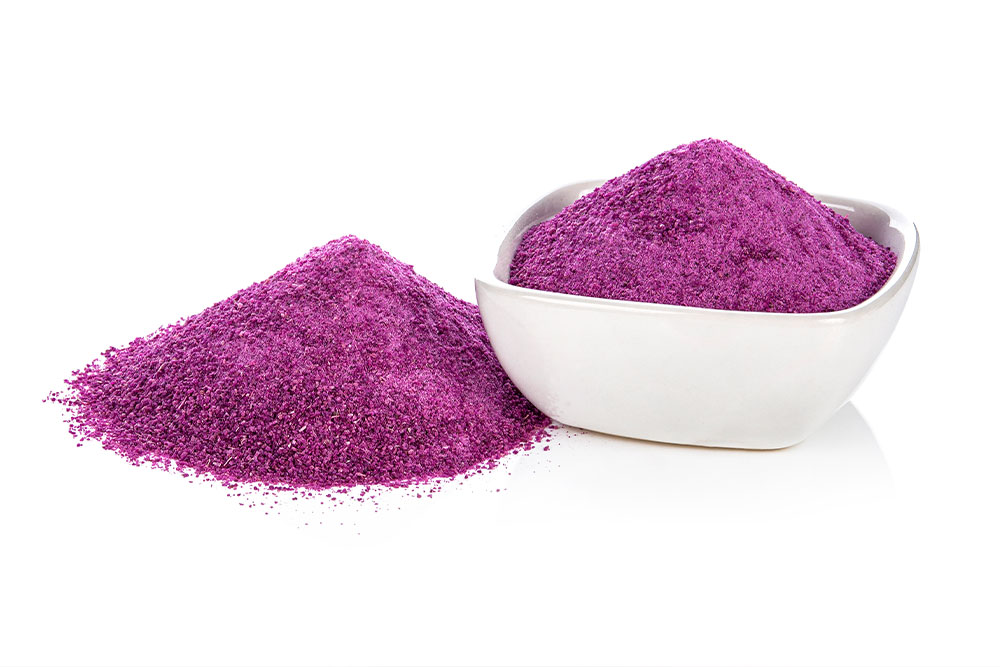
Consumers often expect natural ube to be almost neon purple. Realistically, natural colour varies. The shade can range from lavender and muted violet to a deeper purple depending on the variety of yam, growing conditions and processing method. Extremely uniform or fluorescent colour may suggest that colourants have been added, especially when the ingredient list confirms it.
A good powder should smell mild rather than aggressively perfumed. Genuine ube has a subtle aroma that is often described as earthy, sweet, vanilla-like or slightly nutty. It is not naturally as intense as artificial ube flavouring. If opening the package releases an overwhelmingly candy-like smell, check whether flavouring has been added.
Texture also matters. A finely milled ube powder for baking mixes more evenly into doughs and batters, while coarse particles can create graininess. Some clumping is normal because dried plant powders can absorb moisture from the air. Large hard lumps, however, may indicate poor storage or moisture exposure.
How does processing affect ube powder?
Fresh ube contains considerable moisture, so it must be dehydrated before it can become a shelf-stable powder. Processing affects colour, taste and how easily the finished ingredient rehydrates. Gentle drying generally preserves the tuber’s natural character better than excessive heat, although exact outcomes vary according to the equipment and preparation method.
Powder that has been heavily heated may taste more toasted and can lose some of its fresh purple yam character. On the other hand, proper heat treatment is important because raw yam is not normally consumed as an uncooked food. The goal is therefore not simply to find the least processed powder, but one produced using appropriate food processing and good manufacturing practices.
Freeze-dried products sometimes retain strong colour and aroma because water is removed at low temperatures. Conventional dehydrated powder can also be excellent and is often more affordable. The drying method should therefore be considered alongside purity, freshness, packaging and intended use rather than treated as the only sign of quality.
Does ube powder have nutritional benefits?
Ube is naturally a carbohydrate-rich tuber. In its whole-food form, it provides starch, fibre and small amounts of micronutrients. Purple varieties also contain pigments known as anthocyanins, compounds responsible for many red, blue and purple colours found in plants.
The nutritional profile of powdered ube depends on how concentrated it is and whether anything has been added. Removing water increases the concentration of carbohydrates per 100 grams compared with fresh yam. This does not make the powder unhealthy, but portions matter, particularly when it is used in calorie-dense cakes, sweetened drinks or desserts.
Ube should not be treated as a miracle food. Its attractive purple colour and plant origin do not mean that every ube dessert automatically becomes nutritious. A drink containing a small spoonful of ube alongside large amounts of syrup and sugar remains a sweet drink. The overall recipe matters far more than the presence of one fashionable ingredient.
For people who want a straightforward food ingredient, an unsweetened powder can fit easily into a varied diet. It provides colour, flavour and versatility without forcing you to use the large quantities of added sugar found in some ready-made mixes.
How can you identify a trustworthy product label?
The label should tell you exactly what you are buying. Look beyond photographs of purple desserts and marketing phrases such as “premium”, “superfood” or “authentic”. These terms alone say very little about product quality.
Useful information includes:
- 100% purple yam
- Dioscorea alata
- country of origin
- nutrition declaration
- allergen information
- batch identification
- best-before date
- storage instructions
Clear manufacturer or distributor information is also reassuring. Food businesses should be able to identify where their products come from and provide appropriate labelling for the market in which they are sold. Vague packaging with no meaningful ingredient information deserves more caution.
Organic certification may matter to some buyers, but the word organic does not automatically guarantee better flavour or higher nutrient levels. It describes how ingredients are produced under specific agricultural standards. For a consumer primarily interested in purity, the ingredient list and botanical identity remain essential.
Choosing ube powder according to how you plan to use it
The best product depends partly on the recipe. A pure, finely ground powder is particularly useful for baking because it allows you to control moisture and sweetness yourself. For an ube cake, cookies or bread, a powder without added sugar also makes recipe adjustments easier.
Ube powder often needs to be rehydrated before use, especially when a recipe is designed around ube paste or mashed yam. Mixing it with warm water or milk gradually helps create a smooth consistency. Exact ratios vary between brands because powders differ in particle size and moisture content.
For drinks such as an ube latte, very fine powder disperses more easily. Pure powder produces a subtler flavour than an instant flavoured mix, so milk, coconut milk or a small amount of sweetener can help bring out its characteristic taste.
People buying powder mainly for colour should still choose carefully. Natural ube may give a softer purple than artificial colouring. Expecting an intense neon shade without additives can lead to disappointment. The visual result can also change when ube is mixed with eggs, flour, dairy products or acidic ingredients.
Freshness and storage are easy to overlook
Even excellent ube powder can deteriorate if it is exposed repeatedly to humidity, heat or air. Moisture is particularly problematic because powdered foods readily absorb it. Keep the package tightly sealed and follow the manufacturer’s storage directions.
A resealable opaque pouch or well-sealed container helps protect the powder from light and humidity. Always use a dry spoon. Introducing even small amounts of water into the package can encourage clumping and reduce storage stability.
Colour and aroma may slowly fade during storage. That is one reason buying an enormous package is not necessarily economical if you only make an ube latte once every few weeks. A smaller quantity that remains fresh can provide better value than a bulk pack sitting open for months.
Red flags when buying natural ube powder
Several warning signs deserve attention. A product claiming to be completely natural while listing multiple artificial colours or flavours is clearly not equivalent to a single-ingredient ube powder. Similarly, unusually low prices can sometimes reflect dilution with cheaper ingredients, although price alone cannot prove quality.
Be cautious when the botanical ingredient is impossible to identify. Ube, purple sweet potato and taro are not interchangeable names. Sellers should not rely on attractive purple imagery while leaving the actual ingredient ambiguous.
Useful warning signs include:
- unclear ingredient list
- unidentified purple root
- excessive added sugar
- artificial colourants
- damaged packaging
- missing storage information
- unusually strong artificial aroma
The strongest choice is usually less dramatic: a clearly labelled powder made from genuine purple yam, with straightforward processing information and packaging designed to protect it from moisture. Purity, traceability and freshness matter more than fashionable claims printed across the front of the packet.
What makes an ube powder worth buying?
A quality product starts with genuine Dioscorea alata, contains few or no unnecessary additions, and provides enough information for you to understand what you are consuming. Natural variation in colour should not be considered a defect. In many cases, it is more credible than an unnaturally intense violet shade.
Choose according to the intended use. Pure powder gives cooks the most flexibility, while sweetened mixes offer convenience for quick drinks and desserts. Neither format needs to be judged solely by appearance. Ingredient transparency is far more informative.
Nutrition should also remain in perspective. Ube can be part of a balanced diet and offers the characteristic pigments and nutrients of a purple yam, but its health value depends heavily on what accompanies it. An unsweetened powder stirred into a simple recipe is very different nutritionally from an ube dessert loaded with sugar and cream.
When the label clearly identifies the yam, the ingredient list is short, the powder smells natural and the packaging protects it properly, you have most of the information needed to make a sensible choice. That combination is a far more reliable definition of quality natural ube powder than colour intensity or marketing language.