Hierarchical Navigable Small Worlds: Efficient Algorithm for Finding Approximate Nearest Neighbors in Graphs

Searching for the most similar items in a large dataset is a fundamental challenge in machine learning and data retrieval. Whether you are building a recommendation engine, an image search system, or a semantic search tool, finding the nearest neighbors to a given query point quickly and accurately is critical. Hierarchical Navigable Small Worlds (HNSW) is one of the most efficient algorithms designed to solve this problem. Understanding how it works is increasingly valuable, especially for learners enrolled in a generative ai course in Hyderabad looking to master modern AI infrastructure.
What Is the Nearest Neighbor Search Problem?
Before diving into HNSW, it helps to understand the core problem it solves. Given a large collection of data points in a high-dimensional space, the nearest neighbor search task is to find the point (or points) closest to a given query. Exact methods work well for small datasets, but they become computationally impractical as data scales to millions or billions of entries. This is where Approximate Nearest Neighbor (ANN) algorithms step in — trading a small degree of accuracy for dramatic speed improvements.
HNSW belongs to this category of ANN algorithms and currently stands as one of the fastest and most accurate options available.
How HNSW Works: The Core Idea
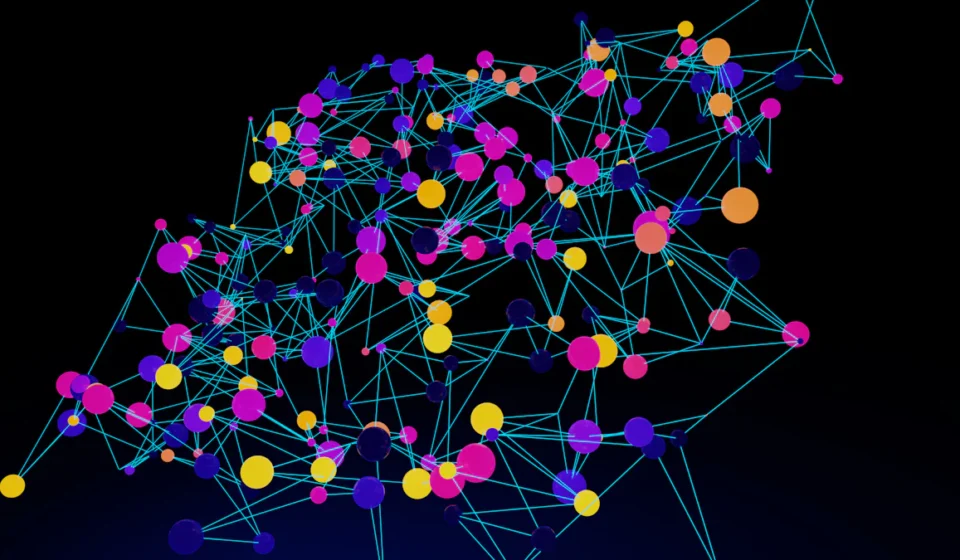
HNSW builds a multi-layered graph structure inspired by the concept of “small world” networks — networks where any two nodes can be reached in just a few steps. The algorithm was introduced by Yury Malkov and Dmitry Yashunin in 2016 and has since become a cornerstone of modern vector databases.
Graph Construction
The algorithm constructs a layered graph where:
- The top layers contain fewer nodes and act as express highways, allowing the search to cover large distances quickly.
- The lower layers become progressively denser, enabling fine-grained, precise searches.
Each node in the graph is connected to a fixed number of neighbors based on proximity. When a new data point is inserted, the algorithm randomly assigns it a maximum layer level and links it to its nearest neighbors at each layer from the top down. This randomized hierarchical placement is inspired by skip lists, a probabilistic data structure used in databases.
Search Process
To find the nearest neighbor of a query point:
- The search begins at the topmost layer with a single entry point.
- It greedily navigates toward the query by moving to the closest neighbor at that layer.
- Once it finds a local minimum, it descends to the next layer and repeats.
- At the bottom layer (layer 0), it performs a more exhaustive local search and returns the best candidates.
This approach ensures that the algorithm skips large portions of the dataset in early layers, dramatically reducing the number of distance computations needed.
Why HNSW Outperforms Other ANN Methods
Several ANN algorithms exist, including Locality Sensitive Hashing (LSH) and tree-based methods like KD-Trees. HNSW consistently outperforms these in benchmarks for several reasons:
- High recall at low latency: HNSW achieves recall rates above 95% while maintaining millisecond-level query times.
- Scalability: It handles tens of millions of vectors efficiently without significant performance degradation.
- No retraining required: Unlike some indexing methods, HNSW allows dynamic insertion of new data points without rebuilding the entire index.
- Tunable parameters: Parameters like M (the number of connections per node) and efConstruction (search depth during construction) give developers control over the speed-accuracy trade-off.
These qualities make HNSW the default indexing method in popular vector databases such as Weaviate, Milvus, and Qdrant.
HNSW in Generative AI Applications
HNSW plays a central role in Retrieval-Augmented Generation (RAG), a widely used technique in modern generative AI systems. In RAG, large language models retrieve relevant context from a knowledge base before generating a response. This retrieval step depends entirely on fast and accurate nearest neighbor search — which is precisely what HNSW delivers.
Students pursuing a generative ai course in Hyderabad will frequently encounter HNSW when working with vector databases, embedding models, and RAG pipelines. Understanding the algorithm gives practitioners the ability to optimize retrieval performance, tune index parameters, and build scalable AI applications from the ground up.
Conclusion
Hierarchical Navigable Small Worlds represents a significant milestone in the evolution of similarity search. Its layered graph design enables fast, accurate, and scalable approximate nearest neighbor retrieval — making it indispensable for modern AI systems. For anyone pursuing a generative ai course in Hyderabad, gaining hands-on familiarity with HNSW is not just beneficial — it is essential for building production-grade AI applications that perform reliably at scale.