
Ask five humans on a construction website to explain the distinction between coordination and conflict detection, and you may get five distinctive solutions. The two phrases are used interchangeably so regularly that many groups assume they are the same thing, when in reality one is a broad method, and the other is a unmarried device within it. That confusion is not simply educational; it impacts how initiatives get staffed, how schedules get built, and how disputes get resolved when something does not suit inside the discipline. Understanding where one ends and the other starts helps everybody on a project speak the same language. In this text, we’ll break down what each term means, how they relate to each other, and why the distinction matters more than most human beings understand.
Understanding What MEP BIM Coordination Really Means
Coordination is the umbrella technique of bringing every building system mechanical, electrical, plumbing, fire protection, and, on occasion, structural steel- into a unified digital version so they may be checked against each other before construction starts. When people hire a corporation for MEP BIM coordination services, they are no longer simply inquiring for a clash record; they’re asking for a whole workflow that consists of modeling, scheduling input, and ongoing collaboration among trades from design through setup. It’s a non-stop process that spans the life of an assignment, not a one-time assignment done as soon as it’s done and forgotten.
More Than a Single Deliverable
Coordination covers the whole lot from preliminary design format to the very last sign-off drawings. It consists of routing choices, sequencing conversations, and consistent communication among change companions because the design evolves.
Who’s Involved in the Process
Mechanical, electrical, plumbing, and fire safety detailers typically each build their own part of the model, then merge their work into a shared federated model that a coordination lead manages.
Why It Runs the Length of the Project
Unlike a one-time task, coordination continues as layout adjustments roll in, device receives substituted, or subject situations display something the original drawings missed. It’s an ongoing communication, not a one-time milestone.
Where Clash Detection Fits Into the Bigger Picture
Clash detection, alternatively, is one unique part within that large coordination process, using software programs that automatically scan the blended version and flag where elements physically occupy the same space. It’s a diagnostic tool, not a strategy. Many firms that offer Estimating Services rely upon clean, conflict-free models to generate accurate cost estimates because a version still full of unresolved conflicts produces numbers that don’t replicate what is going to be clearly constructed.
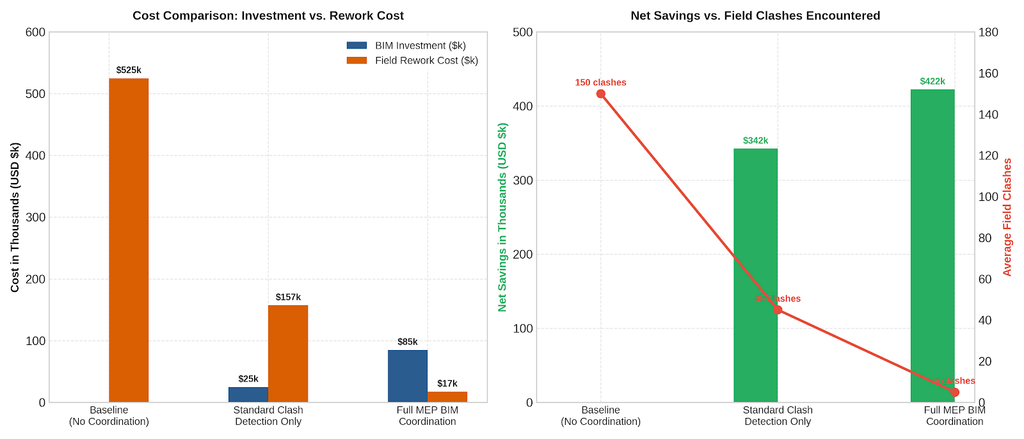
| Project Metric / Variable | Baseline (No Coordination) | Standard Clash Detection Only | Full MEP BIM Coordination |
| Project Size (Est. MEP Contract) | $10,000,000 | $10,000,000 | $10,000,000 |
| BIM / Software Investment | $0 | $25,000 | $85,000 |
| Average Field Clashes Encountered | ~150 clashes | ~45 clashes | ~5 clashes |
| Average Cost per Field RFI / Rework | $3,500 | $3,500 | $3,500 |
| Total Field Rework Cost | $525,000 | $157,500 | $17,500 |
| Net Cost (Investment + Rework) | $525,000 | $182,500 | $102,500 |
| Total Net Savings | Baseline | $342,500 | $422,500 |
| Estimated ROI Ratio | N/A | 13.7: 1 | 4.9 : 1 (Net 400%+ ROI) |
How the Software Actually Works
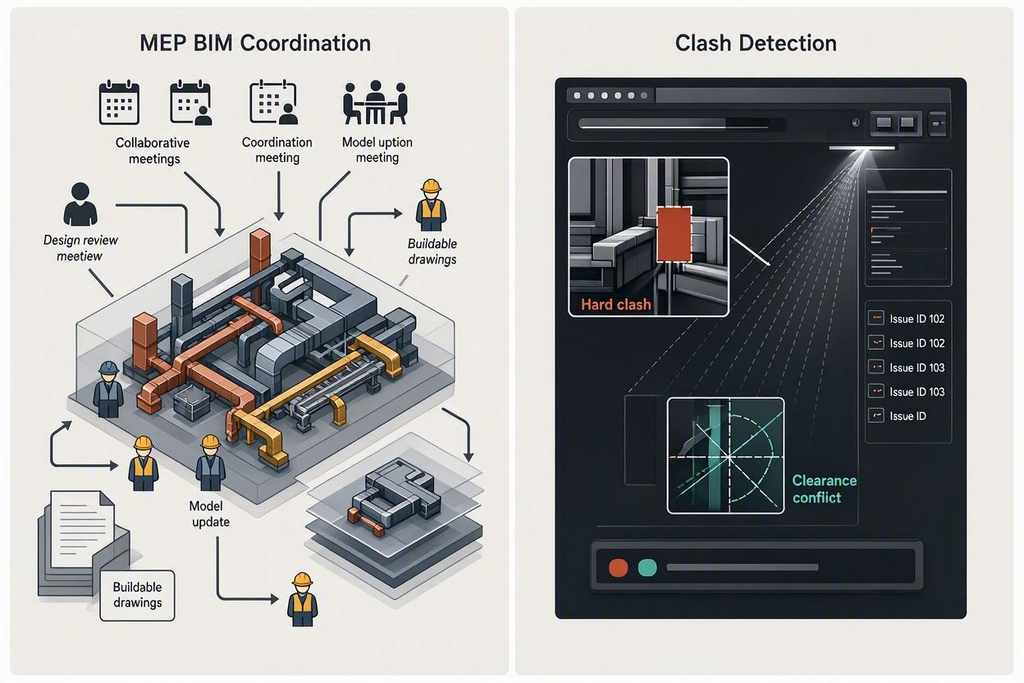
Clash detection engines compare geometry among each change’s versions, sorting outcomes into hard clashes, where items physically overlap, and gentle clashes, where items violate clearance regulations such as inadequate area around a valve.
A Snapshot, Not an Ongoing Process
Running a conflict report takes minutes and produces a static list of conflicts at that actual second. It has to be re-run whenever the model changes to remain beneficial.
Why Clean Data Matters Downstream
A conflict document is as true as the version behind it. Sloppy modeling produces false positives that waste evaluation time, even as accurate modeling turns conflict detection into a reliable checkpoint.
How These Two Processes Work Together on a Project
In practice, clash detection feeds coordination, and coordination resolves what conflict detection reveals. They work like a cycle: run a scan, evaluation flags conflicts in a coordination meeting, modify the model, and scan once more. Interestingly, that same cycle of flag-assessment-regulate shows up in recovery paintings too, wherein a Xactimate Estimator relies on repeated passes over a harm estimate to make sure each line item fits the real scope of restoration before a number is finalized.
The Weekly Rhythm of Coordination Meetings
Most lively initiatives run a habitual assembly where each exchange critiques the new clash record together, decides who moves what, and assigns action items before the next version update.
Turning Conflicts Into Decisions
Not every clash gets resolved in the same manner; occasionally a pipe reroutes, every so often a duct gets resized, and from time to time the restore requires a structural conversation. Coordination is in which the ones exchange-offs surely get determined.
Closing the Loop Before Fabrication
Once a version comes again easily on a clean experiment, it’s taken into consideration to be transferred into saved drawings and fabrication evidence that the coordination-detection cycle has accomplished its job.
What Sets Coordination Apart From Detection Alone
It’s easy to see why the phrases get blurred, but a few clear distinctions separate the two:
- Coordination is a continuous, collaborative technique; conflict detection is an automated test
- Coordination includes decision-making between trades; detection definitely reports conflicts
- Coordination produces buildable drawings; detection produces a list of problems to resolve
Treating clash detection as the end line, rather than one step in an extended process, is one of the most common mistakes groups make on fast-moving initiatives.
Practical Benefits of Keeping the Two Processes Distinct
Separating the 2 standards isn’t always just semantics; it adjusts how groups plan their schedules and group members coordinate their efforts. When leaders recognize that detection is a form of internal coordination, they can:
- Budget realistic time for resolving conflicts, no longer simply walking scans
- Assign the proper professional to every challenge instead of expecting one person to do both
- Set clearer expectations with customers about what a coordination deliverable truly consists of
That readability tends to reduce friction among trades and continues coordination conferences focused on solutions rather than confusion over roles.
Final Thoughts
Coordination and clash detection are not competing phrases; they’re two components of the identical procedure running at different scales. Detection unearths the issues; coordination comes to a decision on a way to repair them and maintains that resolution moving till the version is prepared for the field. Projects that respect this distinction tend to run coordination meetings more successfully, set more practical schedules, and hand off cleaner drawings to the trades constructing the actual systems.
Frequently Asked Questions
1. Is clash detection software sufficient on its own to coordinate an assignment?
No. The software program only identifies conflicts; resolving them nonetheless requires exchange representatives to discuss alternatives, regulate routing, and agree on a final format at some point in coordination meetings.
2. How often does clash detection need to be run during a challenge?
Most active tasks run scans weekly, or after any good-sized version replacement, so conflicts get caught early rather than piling up near fabrication deadlines.
3. Who is accountable for resolving clashes as soon as they are determined?
Resolution is usually a shared responsibility. The alternate whose gadget is simplest to reroute generally adjusts, decided collaboratively throughout the coordination meeting instead of by using one birthday party on my own.
4. Does clash detection trap every kind of warfare?
No. It reliably catches difficult physical overlaps and lots of clearance violations, but subtler issues like future upkeep get right of entry to or code-required service clearances regularly need an educated eye for the duration of manual review.
5. How does this difference affect undertaking price or agenda?
Projects that deal with coordination as an ongoing technique, not only a one-time experiment, tend to catch major subject conflicts earlier, which maintains both cost expenses and installation schedules in line with the original plan.